 +994512060920


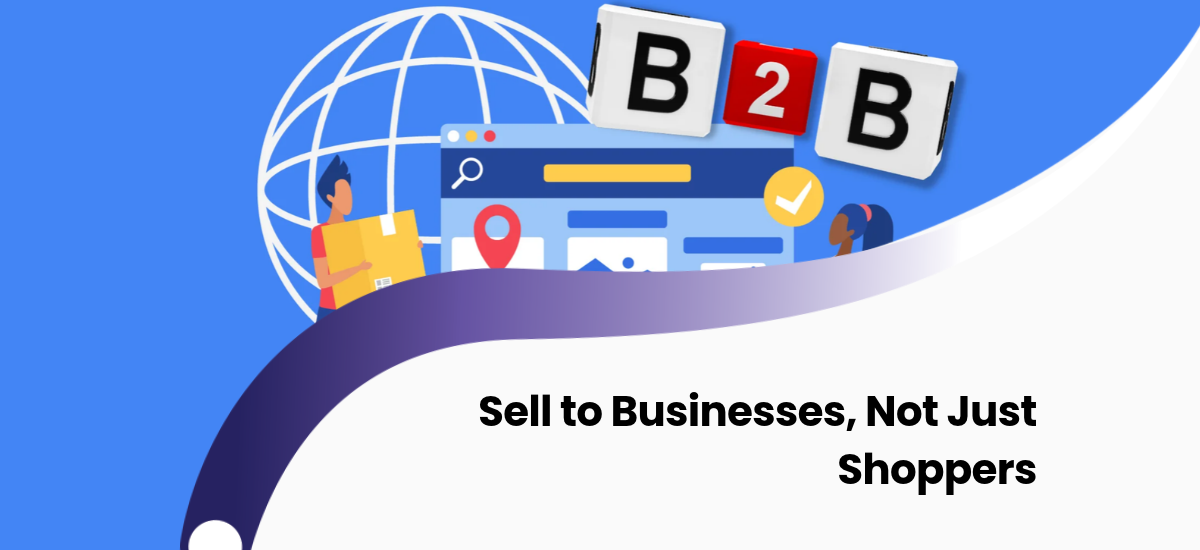
Say "e-commerce website" and almost everyone pictures the same thing: a customer opens the site, drops a product in the cart, pays by card, and the order shows up at the door. That is B2C, the business-to-consumer model, and there is no shortage of guides about it. But for a lot of wholesalers, distributors and manufacturers, the real problem looks completely different. Their customers are not everyday shoppers. They are other businesses, and those businesses ask for prices on WhatsApp, send orders as Excel sheets, and phone in separately when they need an invoice. That is exactly the problem B2B e-commerce exists to solve, yet there is almost no local content on it, even though demand keeps growing.
In this article we'll explain what B2B e-commerce is, how it differs from B2C, and how to tell when your business needs it.
What Is B2B E-commerce?
B2B (business-to-business) e-commerce means selling products or services online to other businesses rather than to end consumers. A wholesaler can set up a system that takes orders directly from retailers, a manufacturer can do the same for distributors, and a supplier for the factories it serves. The difference is not only in who is buying. It runs through the whole logic of the sales process: who sees the price, who approves the order, and when and how payment happens.
Key Differences Between B2B and B2C E-commerce
| Criteria | B2C | B2B |
|---|---|---|
| Pricing | Same for everyone, shown openly | Different for each customer, usually hidden |
| Order volume | Usually small, a single item | Large quantities, bulk orders |
| Payment | Immediate, by card | Deferred, by invoice, with credit terms |
| Decision making | One person decides | Several people may need to approve |
| User account | Individual user | Company account with multiple user roles |
| Catalog | Simple and public | Can look different for each customer |
Why Is B2B E-commerce Still Behind in Azerbaijan?
There are a few reasons. First, B2B sales have traditionally been built on personal relationships. Many distributors don't want to move away from a "my customer will just call me" culture, because they are afraid of losing a connection that took years to build. Second, B2B platforms are far more complex technically than B2C ones, and off-the-shelf solutions like Shopify or WooCommerce don't cover these needs, because they are designed around a single price and a simple catalog. Third, there are few local examples to look at, so companies hold back with a "we don't know how to do this" mindset. The result is that real demand exists but the supply side hasn't caught up, and that gives the first companies to move a serious advantage.
Core Features of a B2B Platform
- Customer-specific pricing: Each customer sees the price and discount assigned to them, and nobody else's.
- Bulk ordering: A customer can order dozens of products at once in a spreadsheet-style format.
- Repeat order history: Repeating a previous order in one click instead of searching for everything again.
- Multi-user accounts and roles: Within one company account, a purchasing manager places the order and the finance director only approves it.
- Credit and deferred payment management: The system itself tracks the customer's credit limit and payment terms.
- Order approval workflow: Orders above a certain amount are automatically routed to a manager for approval.
- Accounting and ERP integration: Orders flow straight into the warehouse and accounting systems with no manual re-entry, which saves a lot of time, especially on high-volume orders.
A Real Example: What a B2B Portal Delivers in Practice
The B2B portal we built at Crocusoft for Vesas.az was created to solve exactly this problem. The distributor gives its business customers a platform with individual pricing, order history and reporting. The core value of this kind of solution is simple. Instead of the sales team logging every order by hand from phone calls and WhatsApp messages, the customer logs in and places the order themselves, and the team can spend its time finding new customers.
The effect usually shows up in three areas. Human errors drop, because the customer enters their own order directly into the system. The repetitive calls that eat a big share of the sales team's day go away. And customers can order at any time, regardless of working hours, which matters especially for customers in other regions and time zones.
Which Businesses Need B2B E-commerce?
Wholesalers, manufacturers, distributors, suppliers and any business that ships goods to retailers can benefit from this model. The sign is simple: if most of your customers are other businesses rather than individuals, and orders repeat often, your current process (phone, WhatsApp, Excel) may already have become a bottleneck that eats your team's time. In particular, if your sales team spends every day manually processing similar orders from the same customers, that is the point where automation is needed most.
Technical Challenges
Building a B2B platform is harder than building a B2C one for several reasons. Customer-specific pricing logic requires complex rule sets. Sometimes you need to keep a different price list for hundreds of customers, and those prices can change depending on conditions such as order volume, customer category or campaign period. API integration with existing accounting and ERP systems is important in most cases, because order data should never be entered twice, which means both lost time and a risk of mistakes. For this reason, a B2B platform almost always calls for custom software, since an off-the-shelf template can't provide this level of flexibility.
The Most Common Mistakes
The most common mistake companies make when moving to a B2B platform is taking a ready-made B2C platform and trying to adapt it by simply adding a "custom price" feature. That can work as a short-term fix, but as the customer count grows the system clogs quickly, and every new customer needs extra manual configuration. The second mistake is starting to build the platform without documenting the existing sales process, so the platform ends up reflecting a process someone assumed rather than the real need. The third is postponing accounting integration with a "we'll do it later" attitude, even though it requires the architecture to be set up correctly from the start, and adding it afterwards can mean a major rebuild.
How to Get Started
The first step is to document your current sales process: how your customers place orders, how prices are set, and who gives approval. Building a platform without a clear picture of that risks simply moving the existing chaos into digital form. Next, find out what integration options your current accounting system offers, because that directly shapes the platform's architecture and limits which features can be added later.
It also helps to start with a small group of customers rather than everyone at once. Pick a handful of the most active customers, the ones who order often and who are open to trying something new, and let them use the platform first. Their feedback will show you what is missing long before the whole customer base depends on the system.
Frequently Asked Questions
Is a B2B platform worth it for a small distributor?
Yes, if you have repeat orders. Even a small distributor with 20 to 30 customers can save a meaningful amount by moving hours of phone time onto a platform, and over the long run that adds up to a significant sum.
Is a B2B platform the same thing as an off-the-shelf CRM?
No. A CRM manages customer relationships, while a B2B platform is a tool where the customer can place orders on their own. Sometimes the two are integrated together.
What if existing customers refuse to switch to the new system?
A gradual transition is recommended. The platform runs in parallel with the old way of working, and as customers adapt at their own pace, the old method slowly fades out.
How long does it take to build a B2B platform?
A simple catalog and ordering system can take a few months, while a full system with accounting integration and complex pricing logic takes longer.
Can a B2B platform also be used for B2C sales?
Sometimes, yes. A "hybrid" model is possible, but given the extra complexity it should be decided during the project planning stage.
Is accounting integration absolutely necessary?
It can wait at the very start, but as you grow, copying data by hand becomes both a time sink and a source of errors. It is smarter to plan for it in the long term.
Conclusion
Almost everything written about e-commerce in Azerbaijan is aimed at selling to end consumers. Yet the digitization opportunity for companies that sell business to business is just as big, it simply gets talked about less. A sales process run over phone and Excel spends your team's most valuable resource, its time, on repetitive administrative work. A B2B platform gives that time back and lets the sales team focus on its real job, which is finding new customers and strengthening existing relationships. For broader sales strategies, you can also read our article on increasing sales with an e-commerce website.
If you want to assess whether your business is ready for B2B e-commerce, get in touch with the Crocusoft team. Let's look at your current sales process together.