 +994512060920


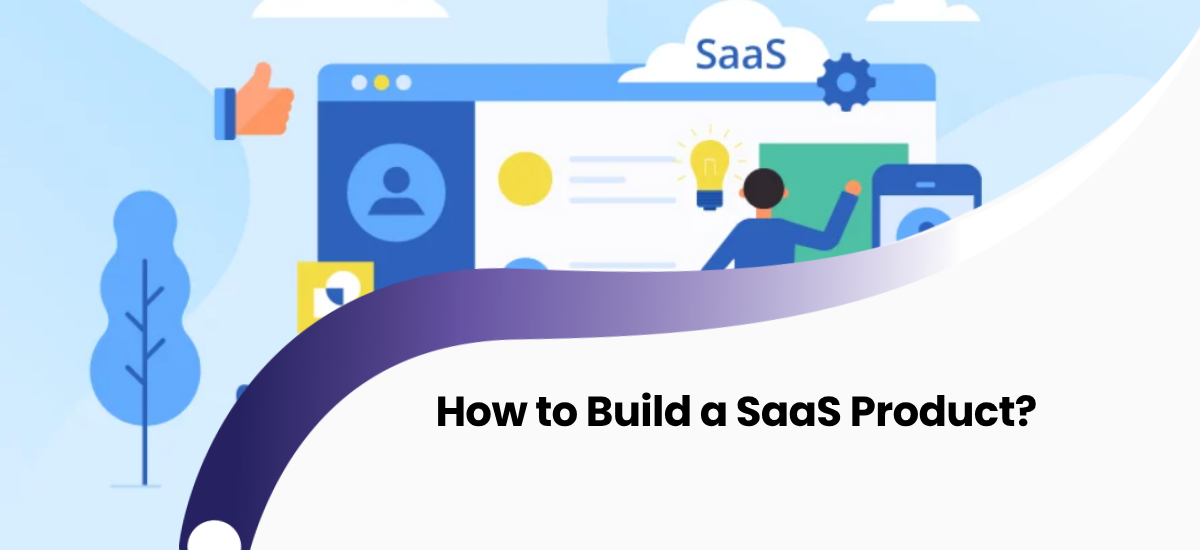
You identify a massive operational gap in your daily workflow or industry. You think to yourself, "There isn't a proper, localized software solution to solve this problem." Alternatively, existing global solutions might be too complex, overly expensive, or completely misaligned with local market regulations and language requirements. It is in this exact moment of friction that a new SaaS (Software as a Service) idea is born.
However, immediately after the initial spark, a wave of complex, real-world questions arises: Where should I even begin? How do I structure the technical architecture? What will be the required budget and timeline? How should I structure my pricing model?
In this comprehensive article, we break down the entire process of building and launching a SaaS product from scratch—including real-world costs, the MVP approach, and the fatal mistakes you must avoid.
SaaS product development: Why is this business model so profitable?
SaaS product development differs radically from traditional, on-premise software businesses. The SaaS model is designed so that the customer does not install heavy software on their local servers, nor do they pay massive upfront fees for manual updates. The software runs continuously on your (the provider’s) cloud infrastructure, and the customer simply accesses it via a web browser by paying a monthly or annual subscription fee.
Why is this model incredibly attractive to investors and founders? Because the system generates highly predictable, Monthly Recurring Revenue (MRR). Even as your customer base multiplies, your operational costs do not rise at the same rate (yielding very high margins), and every new technical feature you deploy instantly reaches all your users simultaneously.
How is SaaS built: The Step-by-Step Roadmap
The answer to how is SaaS built does not lie solely in programming languages; it is deeply rooted in rigorous market validation and product strategy. The lifecycle consists of the following sequential stages:
Stage 1: From Idea to Problem Validation (Weeks 1-2)
The reason the vast majority of startups fail is glaringly obvious: founders fall in love with their brilliant "solution" (the software) rather than falling in love with a real market problem. Saying "There is no good CRM in Azerbaijan" is an idea, not a problem. A real problem sounds like this: "Local sales teams lose 30% of their potential deals every month because they forget to perform timely follow-ups." Your SaaS must directly stop that financial bleeding.
To validate the problem, conduct at least 20 in-depth interviews with your target audience. If they are currently using messy Excel sheets and experiencing genuine frustration, the problem is real. However, if they enthusiastically say "I would pay for a software like that!" but refuse when you ask for a small pre-order deposit, it means the market is not actually ready to pay for your solution.
Stage 2: Deep Market and Competitor Analysis (Weeks 2-4)
To understand the sheer scale of the market and your actual revenue potential, you must conduct a TAM/SAM/SOM analysis. For instance, if you are building a local HR SaaS:
- TAM (Total Addressable Market): 50,000+ registered active companies in the country.
- SAM (Serviceable Available Market): 8,000 companies with more than 10 employees (your real target pool).
- SOM (Serviceable Obtainable Market): 200 companies you can realistically acquire within the first 2 years of operation.
Stage 3: Defining SaaS MVP Features (Weeks 3-5)
A SaaS MVP (Minimum Viable Product) is the very first operational version of your software, stripped of all luxury features, designed exclusively to solve the core problem. During MVP development, utilize the "MoSCoW" method to prioritize your features:
- Must Have: Without this feature, the core problem is not solved (Include in MVP).
- Should Have: Very useful, but can safely wait for Version 1.1.
- Could Have: Part of the long-term vision, but currently a distraction and waste of time.
Stage 4: Technical Architecture and Core Decisions (Weeks 4-6)
The technical decisions made early in a SaaS project carry the heaviest long-term financial consequences. A flawed infrastructure will rapidly transform into a massive legacy problem.
- Tenancy Architecture: Will your system be Multi-tenant (all customers share the same core codebase and database, separated by secure logic) or Single-tenant (each enterprise customer gets their own isolated environment)?
- Technology Stack: Modern SaaS apps typically rely on React/Next.js for the Frontend, and Node.js, Python, or Go for the Backend. Choose a stack where finding local developer talent is sustainable.
- Mandatory Components: Robust Authentication (SSO), a seamless recurring billing engine (like Stripe), automated daily data backups, and detailed Audit Logs (tracking who did what in the system) are absolute necessities for any SaaS.
Stage 5: Software Engineering and Beta Testing (Months 2-5)
Once the software development process kicks off, operate in "Agile" sprints. At the end of every 2-week cycle, demand a working, tested feature. Before the grand public launch, release the project to 5-10 "Beta" users (the same ones you interviewed during validation). They will actively try to break the system, which is exactly what you want before facing the live market.
The SaaS roadmap: Mastering your Pricing Strategy
Along the SaaS roadmap, pricing is often the most mishandled and critical decision. When pricing your product, do not blindly copy competitors; price according to the tangible value (Value-Based Pricing) you bring to the customer. The primary models include:
- Per Seat (Per User): The customer pays an additional fee for every new employee they add to the system (The most ideal model for B2B tools).
- Tiered Pricing: Offering Starter, Professional, and Enterprise packages, each unlocking a more advanced set of features.
- Freemium: The core functionalities are completely free, but advanced (Premium) features require a paid subscription (Excellent for rapid market penetration).
SaaS Budget and Financial Realities
Below is a realistic cost and timeline estimation mapping for building a high-quality, scalable SaaS MVP:
| Development Phase | Estimated Timeline | Expected Budget Allocation |
|---|---|---|
| Market Research, UX/UI Design & Prototyping | 4–6 Weeks | $2,000 – $4,000 |
| Core Technical Engineering (MVP Build) | 3–5 Months | $10,000 – $25,000 |
| Cloud Server & Infrastructure (Annual) | Continuous | $1,500 – $5,000 |
| Initial Marketing & Sales Execution (Annual) | Continuous | $3,000 – $10,000 |
Note: Profitability (Break-even) in SaaS does not happen overnight. It typically takes 12-18 months to reach a Monthly Recurring Revenue (MRR) that fully covers your operational burn rate. You must plan your financial runway accordingly.
Frequently Asked Questions
Do I absolutely need to be a programmer (or have a technical co-founder/CTO) to launch a SaaS?
In an ideal scenario, yes, it is highly beneficial. However, it is not strictly mandatory. If you are a domain expert who excels at sales and business modeling, you can confidently delegate the technical execution to a professional custom software development agency. A reliable agency essentially operates as your fractional CTO.
What is the most common reason SaaS projects fail shortly after launch?
The most fatal error is the "Perfectionism Syndrome." Founders, terrified of releasing an incomplete product, spend 12 months coding in total isolation. When they finally launch, they realize the market never actually wanted those features. An MVP must meet real users as early as humanly possible.
Does it make sense to build a localized SaaS for a smaller market?
Absolutely. While a local market might be small on a global scale, the number of sectors lagging in digitalization is massive. Foreign systems often struggle with language barriers and fail to integrate with local tax laws and digital signatures. This creates a highly profitable vacuum that a fast, localized SaaS product can quickly dominate.
Conclusion
Building a SaaS platform is not just a technical coding assignment; it is the construction of a complete business and process architecture. The proven formula for success is unchanging: identify a painful human problem, design a streamlined solution, launch the smallest viable version (MVP) into the market, and scale the product based strictly on actual user feedback.
Are you looking for a dedicated technical partner to transform your innovative SaaS idea into clean code and a live, profitable platform? Get in touch with the experienced engineering team at Crocusoft today to discuss your project →